
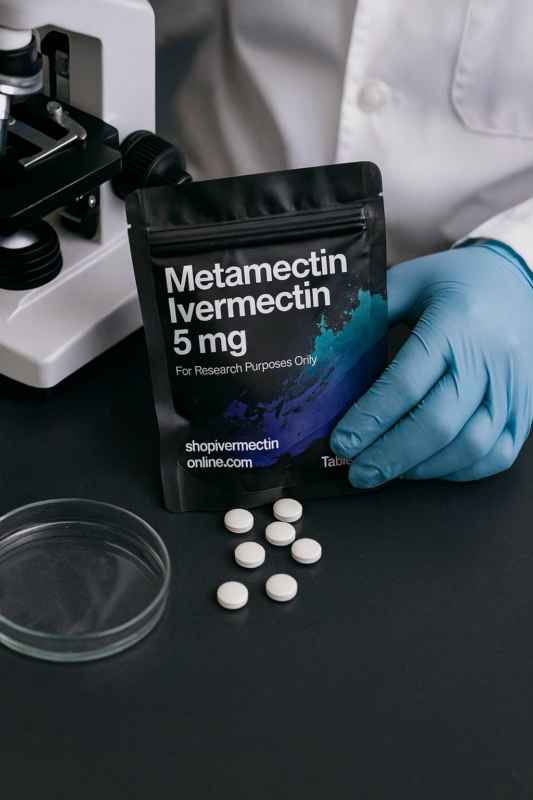
Ivermectin is often described simply as an antiparasitic drug — but the science behind how it works is surprisingly elegant. Understanding the mechanism of action helps explain why ivermectin is so effective against such a wide range of parasites, and why it has relatively few side effects in humans.
The Basic Mechanism: Glutamate-Gated Chloride Channels
Ivermectin works by binding selectively to glutamate-gated chloride ion channels (GluCl channels) — proteins found in the nerve and muscle cells of invertebrates such as worms and insects. When ivermectin binds to these channels, it causes them to open and stay open, flooding the cell with chloride ions. This hyperpolarises the nerve or muscle cell, preventing it from firing. The result is flaccid paralysis — the parasite loses the ability to move, feed, and reproduce. It then dies or is expelled from the body.
Why It Does Not Harm Humans the Same Way
Crucially, GluCl channels do not exist in mammals. Humans and other vertebrates use different chloride channel types that ivermectin binds to only at much higher concentrations than therapeutic doses. This selectivity is the foundation of ivermectin’s strong safety profile in humans. Additionally, ivermectin does not cross the blood-brain barrier in significant amounts at normal doses, further limiting any potential neurological effects.
GABA Receptor Potentiation
Ivermectin also enhances the effect of gamma-aminobutyric acid (GABA), an inhibitory neurotransmitter, at synaptic junctions in invertebrate nerve and muscle cells. This further amplifies the paralytic effect on parasites and contributes to the drug’s broad-spectrum activity.
Which Parasites Does Ivermectin Work Against?
Ivermectin is effective against a wide range of parasites, including roundworms (nematodes), threadworms, whipworms, river blindness (onchocerciasis), lymphatic filariasis, scabies mites, and head lice. Its breadth of activity stems directly from the widespread presence of GluCl channels across parasitic invertebrate species.
Ivermectin and Ectoparasites
Beyond internal parasites, ivermectin also works against ectoparasites — those living on the surface of the body. For insects and mites like scabies mites and head lice, ingested ivermectin circulates in the blood and enters the skin, where it reaches the parasites directly.
A Nobel Prize-Winning Discovery
The discovery of ivermectin earned researchers William Campbell and Satoshi Omura the 2015 Nobel Prize in Physiology or Medicine. The Nobel Committee cited ivermectin’s revolutionary impact on global health, noting it had radically lowered the incidence of river blindness and lymphatic filariasis affecting hundreds of millions of people worldwide.
Learn More
Interested in using ivermectin? Read our guides on proper dosage, side effects, and which parasites ivermectin treats. When you are ready, you can buy ivermectin online through our store.
